The Lament of Autumn Episode 19 — English Subtitles
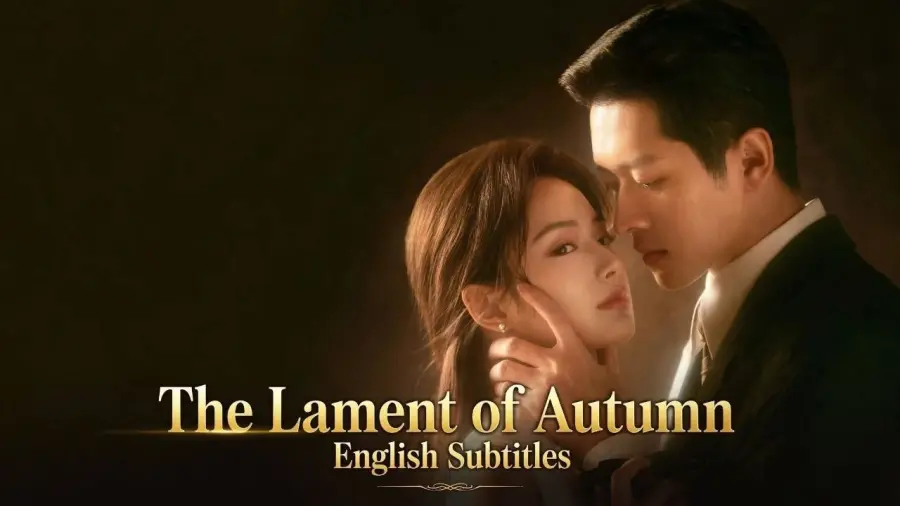
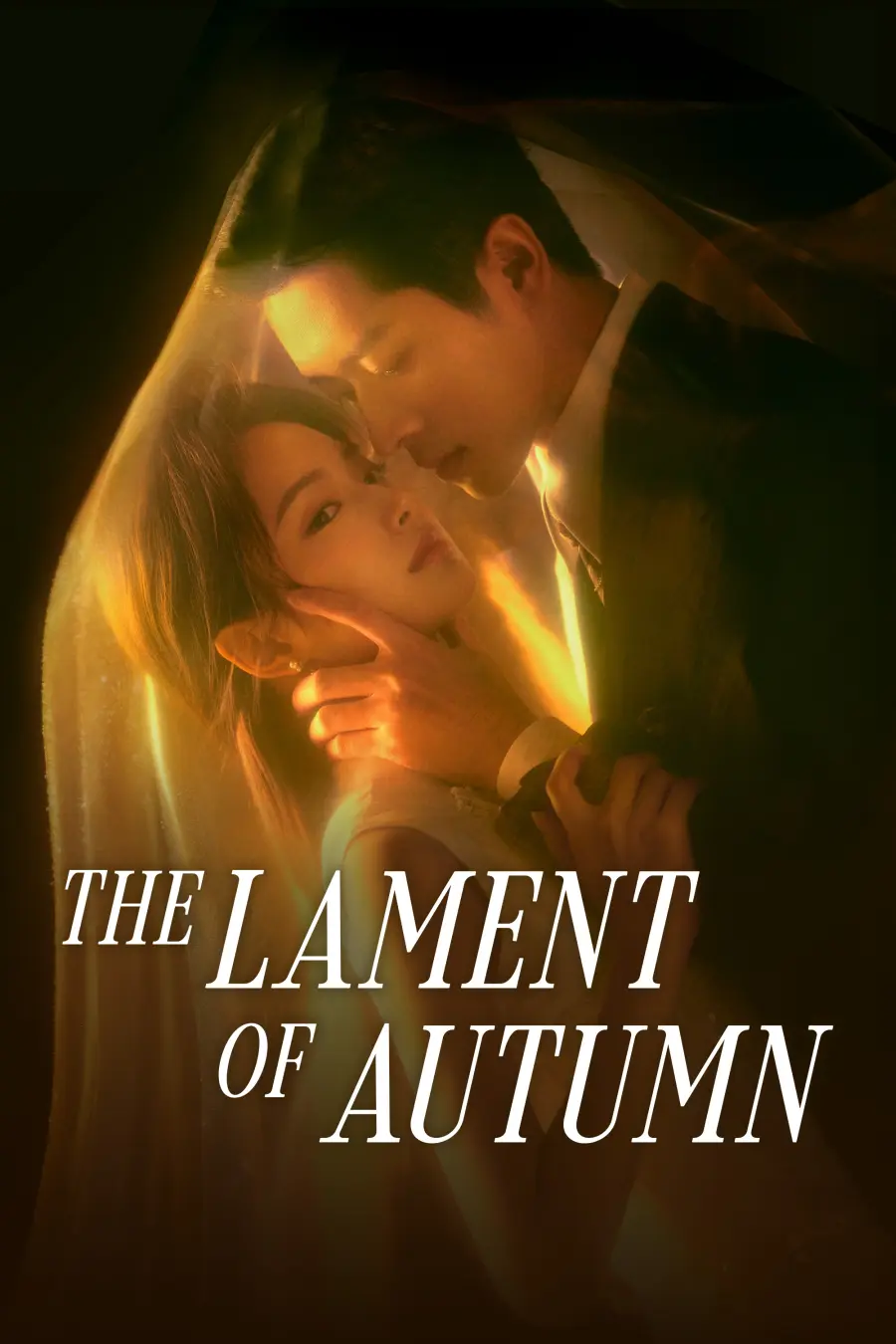
The Lament of Autumn (2026) — Chinese Drama English Subtitles. The Lament of Autumn, also known by its original Chinese title Yu Dian Qiu (玉簟秋), is a Chinese period romance drama set during the turbulent Republican era of the 1920s. Starring Cheng Lei and Xu Ruohan, the series blends romance, political intrigue, family rivalries, suspense, and the devastating consequences of war. Ye Pingjun is a determined young student struggling to support her family and pay for her mother's medical treatment. In search of work, she takes a position at a meeting house in western Hunan. However, her new beginning quickly turns into a nightmare when she becomes entangled in an assassination attempt targeting Yu Changxuan, the fifth son of the powerful Yu family. Wrongfully accused of involvement in the attempted assassination, Pingjun refuses to accept her fate without a fight. She makes a bold bargain with Yu Changxuan: he must discover the real culprit and clear her name within ten days. What begins as a tense investigation brings the two into an unexpected relationship filled with suspicion, challenging encounters, and hidden motives. Yu Changxuan is accustomed to privilege, authority, and getting what he wants. As he investigates the attack and draws closer to Pingjun, his interest in her grows beyond the circumstances that first brought them together. Yet his intentions are not entirely straightforward, and the secrets surrounding powerful families threaten to complicate their developing romance. Set against the political instability and military conflicts of 1920s China, their relationship faces obstacles arising from social differences, personal ambitions, family loyalties, and the struggle for power. As danger grows around them, Pingjun and Changxuan must decide whether their feelings can survive the secrets and conflicts threatening to tear them apart. Adapted from Ling Xi's novel Yu Dian Qiu, The Lament of Autumn combines a slow-building romance with historical atmosphere, mystery, and political drama. Cheng Lei portrays Yu Changxuan, while Xu Ruohan plays Ye Pingjun. Their characters' complicated connection forms the heart of a story about love, courage, trust, and difficult choices during a period of national uncertainty. If you enjoy Chinese historical romance dramas featuring a powerful male lead, a courageous female protagonist, family conspiracies, military conflict, and emotional storytelling, The Lament of Autumn is a series to explore. ⭐ Viki Rating: 9.8/10 (platform rating; subject to change) 🎭 Starring: Cheng Lei and Xu Ruohan 📺 Episodes: 40 listed episodes 🗓️ Premiere Date: October 12, 2026 📡 Original Networks: Hunan Television and Mango TV 🎬 Original Title: 玉簟秋 (Yu Dian Qiu) 🌏 Country: China 🗣️ Original Language: Mandarin Chinese 💬 Subtitles: English and additional languages, depending on platform and region 📚 Adapted From: Yu Dian Qiu by Ling Xi 🎭 Genres: Romance, Period Drama, History, War ⏱️ Episode Duration: Approximately 45–50 minutes
The Lament of Autumn Episode 19 (玉簟秋) brings Yu Changxuan and Ye Pingjun into another dangerous confrontation as their unresolved feelings collide with rising anti-Japanese tensions and political intrigue. After Changxuan returns from the battlefield, Pingjun visits the military headquarters to thank him for saving her mother's life. Their meeting, however, is far from a reconciliation. Changxuan reminds her that she once demanded they never appear before one another again. Pingjun explains that she has come only to express her gratitude, but Changxuan insists that saving her mother was a small matter to him and that they should no longer interfere in each other's lives. Hurt by his cold words, Pingjun leaves. Changxuan watches her walk away from a window upstairs, revealing that his feelings remain far more complicated than he is willing to admit. After leaving the headquarters, Pingjun goes to a temple to fulfill a vow she made while Changxuan was in danger. She had prayed for his safe return, promising that she would otherwise never have the chance to thank him in person. Now that he has returned, she hopes they can each continue their lives separately and find peace. Yet the prayer also reveals how deeply she worried about him while he was away. Although she tries to convince herself that their relationship belongs to the past, her concern for his safety has not disappeared. Pingjun begins travelling with members of her theatrical troupe to perform for audiences around the city. Unknown to her, Changxuan quietly follows the troupe, watching her from a distance rather than approaching her directly. When heavy rain suddenly falls, Pingjun takes shelter at the entrance of Da Hua Department Store. Changxuan buys an umbrella and asks a vendor to deliver it to her. By the time Pingjun looks around, he has disappeared. This silent act of care contrasts sharply with the rejection she experienced at the military headquarters. Changxuan continues to insist that they have no future together, yet his actions suggest that he cannot simply stop worrying about her. The episode's personal conflicts unfold against growing public anger toward Japan. Pingjun and her companion Caizhi take part in demonstrations opposing Japanese actions and encouraging a boycott of Japanese goods. The protest draws a crowd, and the atmosphere becomes increasingly tense when several Japanese men enter the gathering. The demonstrators confront them, and the crowd eventually drives them away. Pingjun and her troupe intend to continue their performances the following day, using the stage to encourage patriotic feeling and resistance to Japanese pressure. Their plans are disrupted when Japanese personnel break into the performance and arrest Pingjun and her companions. The captives are taken to the Japanese Concession, where officials demand that Pingjun publicly apologize for her role in the anti-Japanese demonstrations. They offer to release her if she agrees to retract her actions. Pingjun refuses to apologize. Her decision places her in immediate danger, as the Japanese authorities respond to her defiance with torture. Rather than abandon her principles to secure her freedom, she endures the punishment, even as her condition deteriorates. Meanwhile, Changxuan and Gu Ruitong are investigating suspicious developments within the military. They had initially suspected that Liao Dongfeng had planted an informant in their ranks, but recent events suggest that the conspiracy may involve other infiltrators as well. Their investigation becomes urgent when Li Boren arrives with news that Pingjun has been seized by the Japanese. Jiang Xueting also attempts to organize a rescue, but those around him prevent him from acting independently. With Pingjun's safety at stake, the situation quickly becomes a confrontation between the Japanese authorities and the Yu Army. Gu Ruitong leads Yu Army troops in a military exercise outside the Japanese Chamber of Commerce. The display of force makes the Japanese officials understand that Pingjun is not an ordinary detainee and that keeping her prisoner could provoke a serious confrontation with Changxuan. They recognize that releasing her would cause them to lose face, while refusing to release her could bring the full weight of the Yu Army against them. Faced with these competing pressures, they decide that they must negotiate with Changxuan. Changxuan enters the detention facility and finds Pingjun curled up on the floor, injured and weakened by the abuse she has suffered. His anger and concern give way to immediate tenderness as he lifts her into his arms. When Pingjun wakes and realizes that Changxuan has come for her, she feels relieved. He carries her out of the cell while the military confrontation continues outside. Rather than withdrawing his troops once he has recovered her, Changxuan orders the exercise to continue. The soldiers fire their weapons at the main entrance of the Japanese Chamber of Commerce, making it unmistakably clear that the Yu Army will not be intimidated into abandoning Pingjun. Jiang watches as Changxuan rescues her. He clenches his fingers tightly, forced to confront the depth of Changxuan's concern for the woman he himself has long loved. The rescue also makes the rivalry between the two men more painful. Jiang may have shared years of history with Pingjun, but Changxuan's willingness to confront the Japanese authorities demonstrates that his feelings are not merely a passing attraction. For Pingjun, the rescue reinforces the complicated emotional bond she has tried to escape, even as her relationship with Jiang remains unresolved. After Pingjun returns home, her mother is devastated by the injuries her daughter has suffered. She blames herself for failing to understand how to resolve the conflict between Pingjun and Jiang. Pingjun admits that she once believed she was accustomed to Jiang and that they should naturally remain together because of their long history. Now, however, she is beginning to understand that habit and genuine love are not the same thing. Jiang is an admirable man, but her feelings for him no longer seem to be what they once were. Her mother knows about the past between Pingjun and Changxuan and recognizes that a person cannot be forced to choose a relationship simply because it is familiar. She encourages her daughter to follow her own heart rather than make a decision out of guilt or obligation. Changxuan must also confront the truth about his own relationship. He goes out with Tao Ziyi, who speaks enthusiastically about their future married life. She appears to believe that their wedding remains the natural next step for them. Changxuan, however, tells her directly that he wants to end their relationship. He admits that his original intention to marry her was based on a balance of family and financial interests rather than genuine affection. What once seemed like a practical arrangement has become impossible for him to continue now that his feelings for Pingjun have changed. Tao Ziyi is devastated by his confession. Through tears, she asks why he cannot simply continue pretending as he did before. Changxuan attempts to explain that his experiences after returning from the battlefield have changed his outlook, but Tao refuses to accept that explanation. She recognizes that he has fallen in love with Pingjun and understands that this is the real reason he no longer wants to marry her. Tao reminds him that the Yu Army depends on financial support from her family and that their engagement was always an exchange of interests. She says she could even tolerate Changxuan keeping Pingjun as a mistress, but he is unwilling to make Pingjun accept that position. His refusal makes Tao realize that his feelings for Pingjun are more serious than she wanted to believe. In anger and heartbreak, she slaps Changxuan and leaves. When Tao returns home, she locks herself in her room and refuses to eat or drink. Her tears reveal the pain of discovering that a relationship she believed could secure her future has been built around a man whose heart belongs to someone else. The breakup also threatens the political and financial arrangement between the Yu and Tao families. Changxuan has chosen to stop pretending, but his decision carries consequences beyond his private life, especially because the Yu Army relies on powerful families and their resources. At the same time, representatives of the Japanese Chamber of Commerce invite Changxuan to dinner and introduce him to a Japanese nobleman named Fujiyuki. The visitors propose providing Japanese yen to finance the Yu Army, presenting the offer as an opportunity for cooperation. Changxuan listens but remains cautious. During the meeting, Fujiyuki produces a family medal and attempts to give it to him. Changxuan refuses the medal. Instead, he gives the Japanese visitor a painting titled The Honno-ji Incident before leaving the gathering. The painting is a pointed historical reference that mocks the idea that Japanese power will remain unchallenged indefinitely. Although Changxuan maintains a polite public manner, his choice of gift signals that he has no intention of becoming a controllable ally of the Japanese. The Japanese have anticipated the possibility that the meeting could be used against Changxuan. People arranged by them photograph the encounter and ensure that the images appear in the newspaper the following day. The published photographs create the impression that Changxuan is cooperating with the Japanese and accepting their financial support. The public reacts with suspicion, and accusations of collusion threaten his reputation. The incident demonstrates how a carefully staged photograph can be used as a political weapon, turning a meeting into apparent evidence of betrayal even when the real intentions behind it are different. The truth is more complicated than the newspaper report suggests. Fujiyuki is actually Fujita Ichiro, a Japanese military officer rather than the harmless merchant or nobleman he presents himself to be. The Japanese know that Changxuan's gift was a deliberate insult and that he is not easily manipulated. Their plan is therefore not simply to recruit him, but also to create a public scandal that could weaken his position and undermine trust in the Yu Army. The meeting becomes a trap designed to make Changxuan appear to be working with an enemy responsible for the deaths and suffering of Chinese people. The parade protesting Japanese actions eventually reaches the military headquarters. Yu Zhongquan summons Changxuan and confronts him over the newspaper reports. Zhongquan understands that his son has placed himself in a vulnerable position by meeting with the Japanese without informing him beforehand. He also suspects that Changxuan's personal concerns for Pingjun influenced his decision-making. To Zhongquan, the issue is not merely whether Changxuan intended to cooperate with Japan; it is also that a senior military commander must anticipate how his actions will be interpreted by the public and by his enemies. Zhongquan points out that Fujita Ichiro is a Japanese soldier whose hands are stained with the blood of Chinese people. Changxuan's failure to report the meeting has made the incident look even more suspicious. Although the audience knows that the Japanese have manipulated the encounter, Zhongquan must respond to the political damage and the appearance of misconduct. He declares that Changxuan deserves punishment both emotionally and according to military discipline. He orders that Changxuan receive fifty military canes. The punishment is carried out in front of the soldiers. Changxuan does not escape the consequences of his decision, even though the situation has been engineered by the Japanese to damage him. The soldiers watch as their commander is beaten, and many believe that the punishment is deserved because Fujita Ichiro represents the Japanese military enemy. For Changxuan, the episode becomes another test of endurance: he must bear the public consequences of a calculated trap while protecting his position and continuing to investigate threats within the army. Away from the public confrontation, Kuang Bingwen meets Mu Linsen privately. Kuang knows that Changxuan has begun to suspect that someone inside the army is leaking information or helping enemies interfere with military affairs. He warns Mu Linsen that they should avoid contact for the time being, because any investigation could expose their connection. Kuang also understands that Changxuan will not hesitate to investigate even people connected to his own family if he believes they are involved in a conspiracy. Mu Linsen fears losing an important piece in his larger plan, but he agrees that discretion is necessary while Changxuan's suspicions remain active. Episode 19 brings together several forms of conflict: Pingjun's resistance to Japanese pressure, Changxuan's struggle to protect her, the end of his arranged relationship with Tao Ziyi, and a political trap designed to make him appear sympathetic to Japan. Pingjun's ordeal makes her increasingly aware that her feelings for Jiang have changed, while Changxuan's rescue demonstrates that he remains unable to abandon her. Yet his attempt to manage the Japanese meeting without reporting it to his father leaves him vulnerable to public accusations and severe military punishment. As Kuang Bingwen and Mu Linsen continue to conceal their activities, the danger facing Changxuan extends beyond the battlefield into the military command and the public arena. The Lament of Autumn Episode 19 ends with Changxuan suffering fifty military canes after being framed by the Japanese, while Pingjun recovers from her injuries and begins to question the future she once imagined with Jiang. Changxuan has finally acknowledged that he cannot continue a false engagement with Tao Ziyi, but his love for Pingjun places him in further political danger. The episode highlights the cost of choosing love amid war, the risks of resisting Japanese influence, and the ways hidden conspiracies can turn a commander's intentions against him.
Full Episode
The Lament of Autumn Episode 19 (玉簟秋) brings Yu Changxuan and Ye Pingjun into another dangerous confrontation as their unresolved feelings collide with rising anti-Japanese tensions and political intrigue. After Changxuan returns from the battlefield, Pingjun visits the military headquarters to thank him for saving her mother's life. Their meeting, however, is far from a reconciliation. Changxuan reminds her that she once demanded they never appear before one another again. Pingjun explains that she has come only to express her gratitude, but Changxuan insists that saving her mother was a small matter to him and that they should no longer interfere in each other's lives. Hurt by his cold words, Pingjun leaves. Changxuan watches her walk away from a window upstairs, revealing that his feelings remain far more complicated than he is willing to admit. After leaving the headquarters, Pingjun goes to a temple to fulfill a vow she made while Changxuan was in danger. She had prayed for his safe return, promising that she would otherwise never have the chance to thank him in person. Now that he has returned, she hopes they can each continue their lives separately and find peace. Yet the prayer also reveals how deeply she worried about him while he was away. Although she tries to convince herself that their relationship belongs to the past, her concern for his safety has not disappeared. Pingjun begins travelling with members of her theatrical troupe to perform for audiences around the city. Unknown to her, Changxuan quietly follows the troupe, watching her from a distance rather than approaching her directly. When heavy rain suddenly falls, Pingjun takes shelter at the entrance of Da Hua Department Store. Changxuan buys an umbrella and asks a vendor to deliver it to her. By the time Pingjun looks around, he has disappeared. This silent act of care contrasts sharply with the rejection she experienced at the military headquarters. Changxuan continues to insist that they have no future together, yet his actions suggest that he cannot simply stop worrying about her. The episode's personal conflicts unfold against growing public anger toward Japan. Pingjun and her companion Caizhi take part in demonstrations opposing Japanese actions and encouraging a boycott of Japanese goods. The protest draws a crowd, and the atmosphere becomes increasingly tense when several Japanese men enter the gathering. The demonstrators confront them, and the crowd eventually drives them away. Pingjun and her troupe intend to continue their performances the following day, using the stage to encourage patriotic feeling and resistance to Japanese pressure. Their plans are disrupted when Japanese personnel break into the performance and arrest Pingjun and her companions. The captives are taken to the Japanese Concession, where officials demand that Pingjun publicly apologize for her role in the anti-Japanese demonstrations. They offer to release her if she agrees to retract her actions. Pingjun refuses to apologize. Her decision places her in immediate danger, as the Japanese authorities respond to her defiance with torture. Rather than abandon her principles to secure her freedom, she endures the punishment, even as her condition deteriorates. Meanwhile, Changxuan and Gu Ruitong are investigating suspicious developments within the military. They had initially suspected that Liao Dongfeng had planted an informant in their ranks, but recent events suggest that the conspiracy may involve other infiltrators as well. Their investigation becomes urgent when Li Boren arrives with news that Pingjun has been seized by the Japanese. Jiang Xueting also attempts to organize a rescue, but those around him prevent him from acting independently. With Pingjun's safety at stake, the situation quickly becomes a confrontation between the Japanese authorities and the Yu Army. Gu Ruitong leads Yu Army troops in a military exercise outside the Japanese Chamber of Commerce. The display of force makes the Japanese officials understand that Pingjun is not an ordinary detainee and that keeping her prisoner could provoke a serious confrontation with Changxuan. They recognize that releasing her would cause them to lose face, while refusing to release her could bring the full weight of the Yu Army against them. Faced with these competing pressures, they decide that they must negotiate with Changxuan. Changxuan enters the detention facility and finds Pingjun curled up on the floor, injured and weakened by the abuse she has suffered. His anger and concern give way to immediate tenderness as he lifts her into his arms. When Pingjun wakes and realizes that Changxuan has come for her, she feels relieved. He carries her out of the cell while the military confrontation continues outside. Rather than withdrawing his troops once he has recovered her, Changxuan orders the exercise to continue. The soldiers fire their weapons at the main entrance of the Japanese Chamber of Commerce, making it unmistakably clear that the Yu Army will not be intimidated into abandoning Pingjun. Jiang watches as Changxuan rescues her. He clenches his fingers tightly, forced to confront the depth of Changxuan's concern for the woman he himself has long loved. The rescue also makes the rivalry between the two men more painful. Jiang may have shared years of history with Pingjun, but Changxuan's willingness to confront the Japanese authorities demonstrates that his feelings are not merely a passing attraction. For Pingjun, the rescue reinforces the complicated emotional bond she has tried to escape, even as her relationship with Jiang remains unresolved. After Pingjun returns home, her mother is devastated by the injuries her daughter has suffered. She blames herself for failing to understand how to resolve the conflict between Pingjun and Jiang. Pingjun admits that she once believed she was accustomed to Jiang and that they should naturally remain together because of their long history. Now, however, she is beginning to understand that habit and genuine love are not the same thing. Jiang is an admirable man, but her feelings for him no longer seem to be what they once were. Her mother knows about the past between Pingjun and Changxuan and recognizes that a person cannot be forced to choose a relationship simply because it is familiar. She encourages her daughter to follow her own heart rather than make a decision out of guilt or obligation. Changxuan must also confront the truth about his own relationship. He goes out with Tao Ziyi, who speaks enthusiastically about their future married life. She appears to believe that their wedding remains the natural next step for them. Changxuan, however, tells her directly that he wants to end their relationship. He admits that his original intention to marry her was based on a balance of family and financial interests rather than genuine affection. What once seemed like a practical arrangement has become impossible for him to continue now that his feelings for Pingjun have changed. Tao Ziyi is devastated by his confession. Through tears, she asks why he cannot simply continue pretending as he did before. Changxuan attempts to explain that his experiences after returning from the battlefield have changed his outlook, but Tao refuses to accept that explanation. She recognizes that he has fallen in love with Pingjun and understands that this is the real reason he no longer wants to marry her. Tao reminds him that the Yu Army depends on financial support from her family and that their engagement was always an exchange of interests. She says she could even tolerate Changxuan keeping Pingjun as a mistress, but he is unwilling to make Pingjun accept that position. His refusal makes Tao realize that his feelings for Pingjun are more serious than she wanted to believe. In anger and heartbreak, she slaps Changxuan and leaves. When Tao returns home, she locks herself in her room and refuses to eat or drink. Her tears reveal the pain of discovering that a relationship she believed could secure her future has been built around a man whose heart belongs to someone else. The breakup also threatens the political and financial arrangement between the Yu and Tao families. Changxuan has chosen to stop pretending, but his decision carries consequences beyond his private life, especially because the Yu Army relies on powerful families and their resources. At the same time, representatives of the Japanese Chamber of Commerce invite Changxuan to dinner and introduce him to a Japanese nobleman named Fujiyuki. The visitors propose providing Japanese yen to finance the Yu Army, presenting the offer as an opportunity for cooperation. Changxuan listens but remains cautious. During the meeting, Fujiyuki produces a family medal and attempts to give it to him. Changxuan refuses the medal. Instead, he gives the Japanese visitor a painting titled The Honno-ji Incident before leaving the gathering. The painting is a pointed historical reference that mocks the idea that Japanese power will remain unchallenged indefinitely. Although Changxuan maintains a polite public manner, his choice of gift signals that he has no intention of becoming a controllable ally of the Japanese. The Japanese have anticipated the possibility that the meeting could be used against Changxuan. People arranged by them photograph the encounter and ensure that the images appear in the newspaper the following day. The published photographs create the impression that Changxuan is cooperating with the Japanese and accepting their financial support. The public reacts with suspicion, and accusations of collusion threaten his reputation. The incident demonstrates how a carefully staged photograph can be used as a political weapon, turning a meeting into apparent evidence of betrayal even when the real intentions behind it are different. The truth is more complicated than the newspaper report suggests. Fujiyuki is actually Fujita Ichiro, a Japanese military officer rather than the harmless merchant or nobleman he presents himself to be. The Japanese know that Changxuan's gift was a deliberate insult and that he is not easily manipulated. Their plan is therefore not simply to recruit him, but also to create a public scandal that could weaken his position and undermine trust in the Yu Army. The meeting becomes a trap designed to make Changxuan appear to be working with an enemy responsible for the deaths and suffering of Chinese people. The parade protesting Japanese actions eventually reaches the military headquarters. Yu Zhongquan summons Changxuan and confronts him over the newspaper reports. Zhongquan understands that his son has placed himself in a vulnerable position by meeting with the Japanese without informing him beforehand. He also suspects that Changxuan's personal concerns for Pingjun influenced his decision-making. To Zhongquan, the issue is not merely whether Changxuan intended to cooperate with Japan; it is also that a senior military commander must anticipate how his actions will be interpreted by the public and by his enemies. Zhongquan points out that Fujita Ichiro is a Japanese soldier whose hands are stained with the blood of Chinese people. Changxuan's failure to report the meeting has made the incident look even more suspicious. Although the audience knows that the Japanese have manipulated the encounter, Zhongquan must respond to the political damage and the appearance of misconduct. He declares that Changxuan deserves punishment both emotionally and according to military discipline. He orders that Changxuan receive fifty military canes. The punishment is carried out in front of the soldiers. Changxuan does not escape the consequences of his decision, even though the situation has been engineered by the Japanese to damage him. The soldiers watch as their commander is beaten, and many believe that the punishment is deserved because Fujita Ichiro represents the Japanese military enemy. For Changxuan, the episode becomes another test of endurance: he must bear the public consequences of a calculated trap while protecting his position and continuing to investigate threats within the army. Away from the public confrontation, Kuang Bingwen meets Mu Linsen privately. Kuang knows that Changxuan has begun to suspect that someone inside the army is leaking information or helping enemies interfere with military affairs. He warns Mu Linsen that they should avoid contact for the time being, because any investigation could expose their connection. Kuang also understands that Changxuan will not hesitate to investigate even people connected to his own family if he believes they are involved in a conspiracy. Mu Linsen fears losing an important piece in his larger plan, but he agrees that discretion is necessary while Changxuan's suspicions remain active. Episode 19 brings together several forms of conflict: Pingjun's resistance to Japanese pressure, Changxuan's struggle to protect her, the end of his arranged relationship with Tao Ziyi, and a political trap designed to make him appear sympathetic to Japan. Pingjun's ordeal makes her increasingly aware that her feelings for Jiang have changed, while Changxuan's rescue demonstrates that he remains unable to abandon her. Yet his attempt to manage the Japanese meeting without reporting it to his father leaves him vulnerable to public accusations and severe military punishment. As Kuang Bingwen and Mu Linsen continue to conceal their activities, the danger facing Changxuan extends beyond the battlefield into the military command and the public arena. The Lament of Autumn Episode 19 ends with Changxuan suffering fifty military canes after being framed by the Japanese, while Pingjun recovers from her injuries and begins to question the future she once imagined with Jiang. Changxuan has finally acknowledged that he cannot continue a false engagement with Tao Ziyi, but his love for Pingjun places him in further political danger. The episode highlights the cost of choosing love amid war, the risks of resisting Japanese influence, and the ways hidden conspiracies can turn a commander's intentions against him.
The Lament of Autumn (2026) — Chinese Drama English Subtitles. The Lament of Autumn, also known by its original Chinese title Yu Dian Qiu (玉簟秋), is a Chinese period romance drama set during the turbulent Republican era of the 1920s. Starring Cheng Lei and Xu Ruohan, the series blends romance, political intrigue, family rivalries, suspense, and the devastating consequences of war. Ye Pingjun is a determined young student struggling to support her family and pay for her mother's medical treatment. In search of work, she takes a position at a meeting house in western Hunan. However, her new beginning quickly turns into a nightmare when she becomes entangled in an assassination attempt targeting Yu Changxuan, the fifth son of the powerful Yu family. Wrongfully accused of involvement in the attempted assassination, Pingjun refuses to accept her fate without a fight. She makes a bold bargain with Yu Changxuan: he must discover the real culprit and clear her name within ten days. What begins as a tense investigation brings the two into an unexpected relationship filled with suspicion, challenging encounters, and hidden motives. Yu Changxuan is accustomed to privilege, authority, and getting what he wants. As he investigates the attack and draws closer to Pingjun, his interest in her grows beyond the circumstances that first brought them together. Yet his intentions are not entirely straightforward, and the secrets surrounding powerful families threaten to complicate their developing romance. Set against the political instability and military conflicts of 1920s China, their relationship faces obstacles arising from social differences, personal ambitions, family loyalties, and the struggle for power. As danger grows around them, Pingjun and Changxuan must decide whether their feelings can survive the secrets and conflicts threatening to tear them apart. Adapted from Ling Xi's novel Yu Dian Qiu, The Lament of Autumn combines a slow-building romance with historical atmosphere, mystery, and political drama. Cheng Lei portrays Yu Changxuan, while Xu Ruohan plays Ye Pingjun. Their characters' complicated connection forms the heart of a story about love, courage, trust, and difficult choices during a period of national uncertainty. If you enjoy Chinese historical romance dramas featuring a powerful male lead, a courageous female protagonist, family conspiracies, military conflict, and emotional storytelling, The Lament of Autumn is a series to explore. ⭐ Viki Rating: 9.8/10 (platform rating; subject to change) 🎭 Starring: Cheng Lei and Xu Ruohan 📺 Episodes: 40 listed episodes 🗓️ Premiere Date: October 12, 2026 📡 Original Networks: Hunan Television and Mango TV 🎬 Original Title: 玉簟秋 (Yu Dian Qiu) 🌏 Country: China 🗣️ Original Language: Mandarin Chinese 💬 Subtitles: English and additional languages, depending on platform and region 📚 Adapted From: Yu Dian Qiu by Ling Xi 🎭 Genres: Romance, Period Drama, History, War ⏱️ Episode Duration: Approximately 45–50 minutes